12 AUGUST 2026 · 20:30 CEST · 1 MIN 42 SEC
On August 12, 2026, the Moon's shadow crosses the Iberian Peninsula for the first time in 121 years, and Vinuesa sits right on the centerline. Exactly where you want to be. Come stand inside the world's most beautiful glitch.
1:42
Duration of totality
20:30
Totality time (CEST)
<30%
Historical cloud cover
1,100m
Elevation
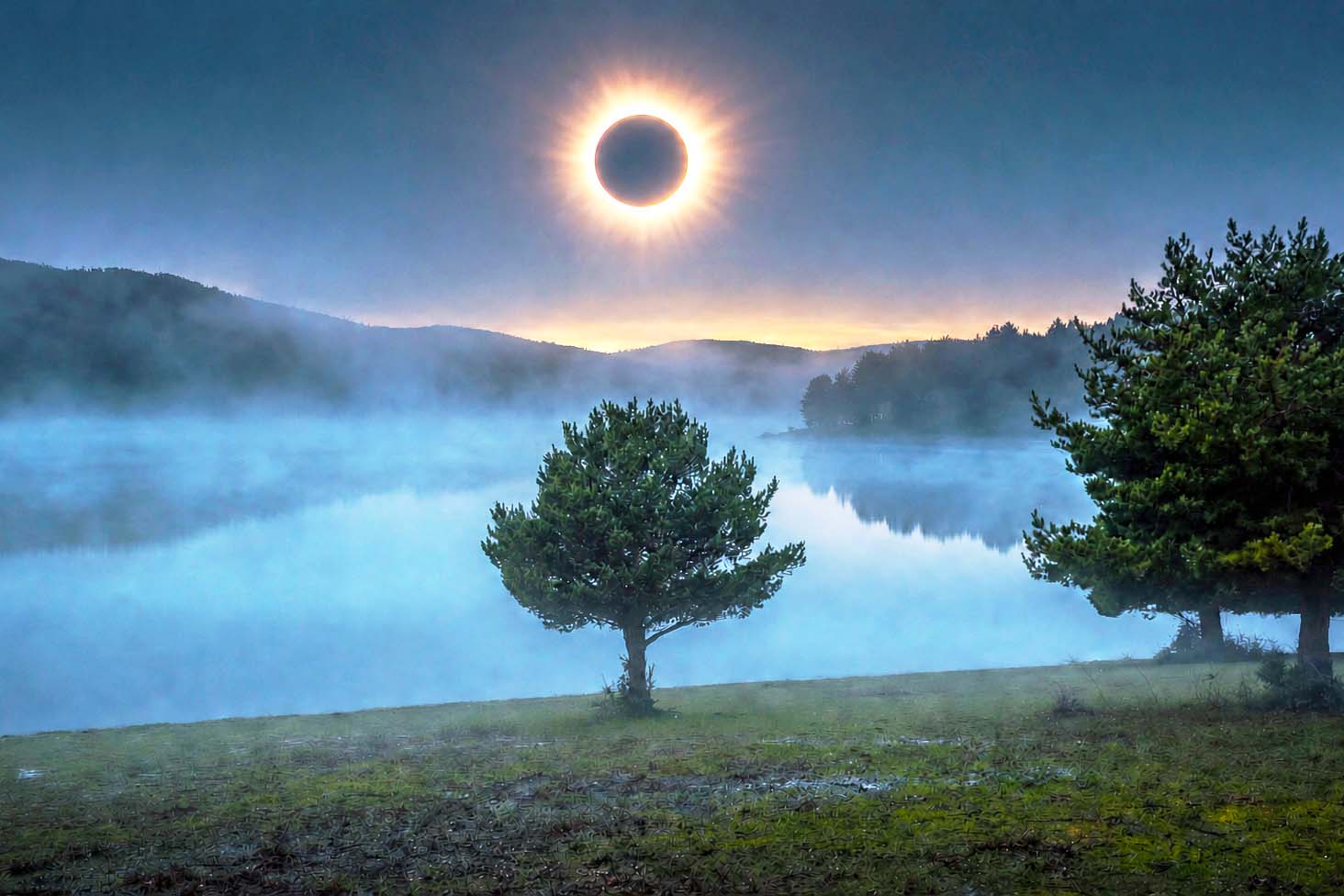
The shadow line has standards. Vinuesa sits almost exactly on the centerline, giving us low light pollution, pine forests, water, space, silence, and a population density of just 9 people per km². Close enough to reach from Madrid, Zaragoza, or Logroño.
The Sun has a rider. Vinuesa delivers.
A total solar eclipse is safe to watch with the naked eye only during totality. In Vinuesa, that means 1 minute and 42 seconds. Before and after that, the Sun is still very much the Sun, so keep your ISO 12312-2 certified eclipse glasses on. Regular sunglasses are cute. They do absolutely nothing here.
We'll provide eclipse glasses with every ticket, staffed information points, and extra viewing guidance for children. Kids must be supervised, and their glasses should fit properly and stay on. If in doubt, keep your glasses on.
Glasses on. The Sun is partially eclipsed but still dangerous.
Glasses off. For 1 minute 42 seconds it is safe — and unforgettable.
Glasses back on immediately. The first sliver of sun returns instantly.
August 12, 2026 — 1 minute 42 seconds of totality on the Vinuesa centerline. Limited capacity, four-day festival.
GET YOUR PASS