A Total Solar Eclipse Gathering
A total solar eclipse is safe to watch — but only if you know when and how. The difference between a life-changing experience and permanent eye damage comes down to a few simple rules.
Never look at the Sun without proper eye protection — except during totality.
The Sun's surface is bright enough to damage your retinas in seconds. This damage is painless and often permanent. Regular sunglasses, even very dark ones, do not provide adequate protection.
The only exception is during totality — the brief window when the Moon completely covers the Sun. During those 1 minute and 42 seconds, and only then, you can look at the eclipsed Sun with your naked eyes.
| Phase | Safe to Look Without Protection? |
|---|---|
| Partial eclipse (before totality) | NO — use eclipse glasses |
| Totality (Sun fully covered) | YES — safe for naked eyes |
| Partial eclipse (after totality) | NO — use eclipse glasses |
How to know when totality begins: Watch for the "Diamond Ring" — a brilliant flash of light as the last sliver of Sun disappears. When the diamond fades and only the soft glow of the corona remains, totality has begun.
How to know when totality ends: The Diamond Ring reappears on the opposite side of the Moon. The moment you see that bright flash, look away or put your eclipse glasses back on.
At Iberia Eclipse, we will provide audio cues and guidance to help you know when it's safe.
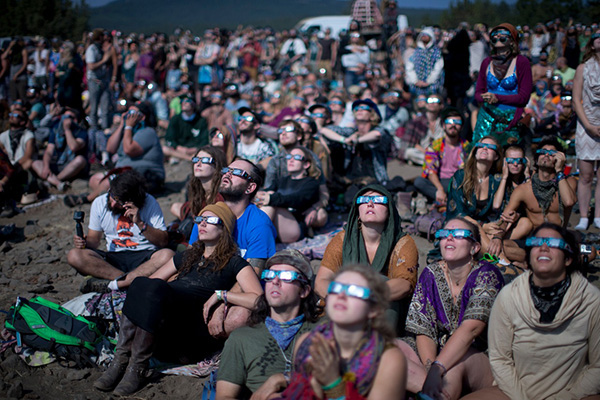
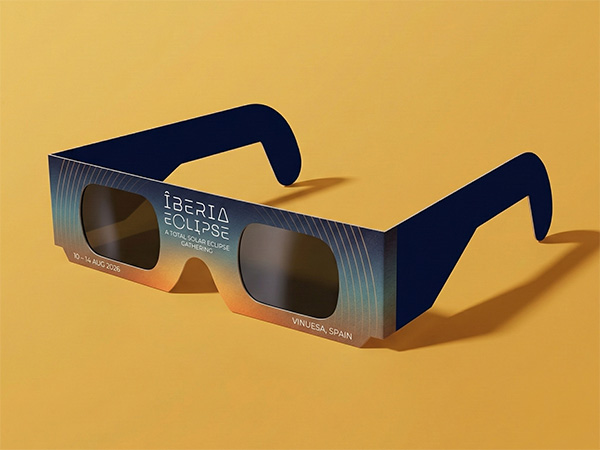
Eclipse glasses (also called solar viewers) are the simplest way to safely watch the partial phases. They block 99.99% of sunlight.
We will have certified eclipse glasses available at the festival. However, we recommend bringing your own to be certain. Purchase only from reputable astronomy retailers or verified vendors.
Do not use eclipse glasses that are more than 3 years old — the filter material can degrade over time.
Never look at the Sun through an unfiltered camera, phone camera, binoculars, or telescope.
The lens concentrates sunlight, making the danger even greater than looking with naked eyes. This applies during all partial phases.
Consider whether you want to experience totality through a viewfinder. You have 1 minute and 42 seconds. Many experienced eclipse watchers recommend putting the camera down and simply being present.
If you must photograph, practice your settings beforehand and keep the process automatic so you can look up.
Children can safely enjoy the eclipse with proper supervision.
Young children may find the partial phase boring and the sudden darkness of totality startling. Prepare them for what to expect.
You can still experience the eclipse safely without looking directly at the Sun.
Poke a small hole in a piece of cardboard. Hold it up to the Sun and let the light project onto a flat surface behind it. You'll see a small image of the crescent Sun.
During the eclipse, tree leaves act as natural pinhole projectors — look at the ground beneath trees for hundreds of tiny crescent Suns.
Hold a kitchen colander up to the Sun. Each hole projects a small image of the eclipsed Sun onto the ground.
Even without looking at the Sun, you'll notice the eclipse. The light changes. Shadows sharpen. The temperature drops. The sky darkens. And during totality, you can look up freely.
If you accidentally looked at the Sun without protection and experience:
Seek medical attention. Solar retinopathy (eclipse blindness) is usually painless at first. Symptoms may appear hours after exposure.
If you have a condition that makes you sensitive to bright light, take extra precautions during partial phases and immediately after totality.
Iberia Eclipse will provide:
Our crew will help ensure everyone can experience this moment safely.